Showing posts with label TRAVEL. Show all posts

Friday, July 18, 2008

RAJASTHAN

RAJASTHAN THE LAND OF GLORY
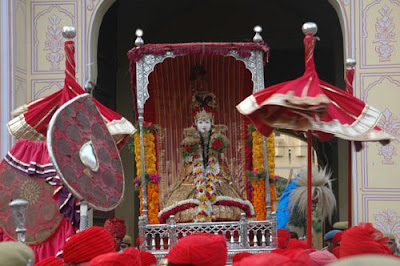

Rajasthan is a land where the vagaries of nature co-exist with the cheer and joy of its people; here life in all its aspects comes emblazoned in the brightest of its colors. The architectural grandeur of royalty and tales of valor and chivalry are the essence of its very spirit.even in times of misery this spitit is evident during the celebration of festivals round the year. Geographically, comprises of two distinct regions divided by the Aravalli range running southwest to northeast, its last low ridge spilling into Delhi. Marwar, Jaislmer and Bikaner are situated in the western and northern parts, which are marked by the aridity of shifting sandhills, the major portion of Thar Desert. The other side of the divide on the other hand is full of dense forests and fertile irrigated valleys, which support the historic sites of Udaipur and Jaipur. Rajasthan, which literally means “Land of Kings”, lies on the northwestern limits of India. Civilization came to Rajasthan before the rest of India. If Harappan culture (2500 BC- 1700 BC) is the general starting point of the evolution of Indian civilization, Rajasthsn takes precedence, as some of its pre-Harappan locations, such as kalibangan, bear testimony of fully-developed and organized society based on agriculture. The excavations at Kalibangan established a link with the Harappan era which flourished between 2500 and 1700 B.C and was part of the Indus valley civilization, which had been traced back to 6000 BC. Harappa represented the zenith of the Bronze Age and was high water mark of the Indus civilization. Its emphasis on town planning was a mark of a well-established society. The earlier part of Rajasthan history is mainly a history of tribal republics, often at war with one another and with neighboring kingdoms. This state of tribal organizations gave way to internal stratification and external aggressions. The region could also not remain immune to the influence of the rise and fall of the vast empires of north India. Thus, even if Rajasthan was not integrated with the Gupta Empire of the fourth and fifth century AD, it bore a subordinate status to the empire.


The most spectacular development in Rajasthan’s history was to take place from about 6th and 7th centuries, when some new warrior clans were formed. These, the Rajputs as they came to be called, were to dominate the history of the region as that of many other parts of the country for centuries to come. Rajput, which literally means the son of the king, claims their origin from the vedic era. According to orthodox Hindu views, the Rajputs of Rajasthan were direct descendents of the Kshatriyas or warriors of vedic India. They were first mentioned in the oldest Hindu stories, the Puranas, between the 3rd and 7th centuries BC, as “solar” or suryavanshi – those who descended from Rama, the hero of the epic Ramayana – and the “lunar” or chandravanshi who claimed descent from Krishna, the hero from the epic Mahabharata. A third clan was the agnikula or fire – born, said to have emerged from the ritual fire or yajna on the top of the sacred mountain, Mount Abu, in Rajasthan. The Rajputs as they claimed their descent from the Kshatriyas of the vedic period were great warriors and fighters. From the earliest times the Rajput kings were called upon to play a difficult role: to defend their faith, to preserve their traditions and to protect Hindustan from marauding attacks of the Muslim invaders. When the adventurer Babur invaded India and established the Mughal dynasty, he had to quell two distinct resisting powers. By first killing Sultan Ibrahim Lodi at the battle of Panipat in April 1526, he established his claim to the thron of Delhi; but he subsequently had to defend that claim against a confederation of Rajput rulers under Rana Sanga of Mewar. In both fights Babur’s forces were heavily out numbered, but the latter one was by far the more difficult and it was only after he had won it, at the battle of Khanua in March 1527, that Babur’s position was secure. More than three centuries before, in 1192, Muhmmad ghuri of ghor had become the first Muslim conqueror of Delhi and he to had had to contend with the Rajputs in order to secure his position: he defeated the last Hindu king of Delhi, the Rajput Prithviraj iii, at tarain. Indeed throughout the whole period of the Muslim political domination of northern and central India, the Rajputs formed the major Hindu powers, which offered resistance. The Rajputs had to pay a heavy price, for their lands were frequently ravaged, and their strongholds captured by the superior Muslim forces. But such was their remarkable valor and tenacity that they refused to be beaten despite the odds. The history of Rajasthan is the stuff of legends. The Rajas fought for their honor, while the ranis who sent the men off to the field urged them to return victorious, or to die fighting on the battle field. The valor and bravery of the Rajputs is epitomized in the famous lines by Suryamal, the royal bard of Bundi state as” poot jhulave palana halariye hulraya, illa na deny aapni maran badai mai” meaning, the mother, while rocking the cradle, sings of bravery and sacrifice, preparing her son for death on the battlefield, rather than the dishonor of retreat.

For the historical records of Rajputs we are dependent on the accounts of foreigners as Alberuni, an Arab scholar. Information can also be had from old inscriptions and coins. But perhaps the best record of events a descriptions of kingdoms and battles fought between them is contained in the khyats or historical prose and verses written by the royal bards, the charans and the bhatts who were patronized by the rulers. The best known of these are Nainsi, from the court of Jodhpur, and Chand Bardai, who immortalized the last Hindu ruler of Delhi, Prithviraj Chauhan. Another important source of Rajput history is the famous work by colonel Jams Tod, who wrote Annals and Antiquities of Rajasthan.

It has been accepted that the Rajputs were divided into thirty-six races and twenty-one kingdoms. The leaders were Sisodias of Mewar (Udaipur), the Kachwas of Amber (Jaipur), the Rathors of Marwar (Jodhpur and Bikaner), the haras of Kota and Bundi, the chauhans of Ajmer, and the Bhattis of Jaisalmer. A series of Muslim invasions from 10th century AD ultimately culminated in the conquest of India by Babur, who founded the Mughal empire in 1526 AD. The Rajputs continued to put great resistance to the might of the Mughals. But when in 1556AD Akaber the greatest of the Mughal rulers ascended the throne of Agra the scenario started to change.

Akber extended his hand of friendship to convert the animosity of the Rajputs into friendly relationships. His liberal policies and far-sightedness attracted many of the Rajput states. Because of these friendly gestures of Akber and the difficulties of wars the Rajput princes also realized the futility of fighting against a superior force, so they cemented their bonds through matrimonial alliances. Bharmal of Amber was first to enter this alliance by marrying his daughter with Akaber. His son, Bhagwan Das, gave his daughter Manbai in marriage to prince Salim, latter to become Emperor Jahangir; Salim also took Jodhabai, the princess of Jodhpur as his wife. Man Singh the son of Bhagwan Das became one of Akaber’s most trusted generals. This process of matrimonial alliances gave the region the much-required peace. This period of peace proved to be the golden period of Rajput culture. It can be said that the golden age of Rajput civilization was closely linked with the destiny of the Mughal Empire. During this period Rajasthan’s political and cultural contacts with the rest of India were considerably widened. This in turn encouraged an assimilation of several cultures into the arts and traditions of Rajput kingdoms, which were already renowned as centers of arts and learning. Karkhanas, or craft workshops were started, based on the Mughal model; Mughal miniature paintings aroused interest and Muslim artists came under royal patronage. Mughal style also influenced the Rajput architecture. Behram Khan, the musician from the Mughal court, was invited to Jaipur, who established the tradition of Dhrupad music in the Jaipur Gharana style. Rajasthan is still the leader in the field of arts and crafts, music and in the dance forms, in India.

But even in this period of peace and matrimonial alliances the proud Ranas of Mewar court had singularly refused to bow before the Mughal might. In 1572, by the time Maharana Pratap came to the throne the princes of Amber, Bikaner, Jaisalmer, Sirohi, and Bundi had come into the Mughal orbit. But Maharana Pratap chose to take on Akaber’s forces at the battle of Haldi-Ghati in 1576. Though he was defeated, he continued guerilla warfare tactics for several years, eventually recovering a large part of his territory. Latter on Maharana Pratap’s son Amar Singh was forced to sign a treaty with the Mughals and for the first time a Mewar Rana paid obeisance to the Mughal court. Again this peace was got disturbed in the time of the Mughal Emperor Aurangzeb because of his anti Hindu policies. He too had to face the resistance of several Rajput princes, which he overcame with great difficulty. After Aurangzeb Mughal Empire disintegrated and like others most of the Rajput states entered into treaties with the East India company and latter ultimately accepted the British rule, which continued till India got its freedom from the British rule in 1947AD.

Thursday, May 1, 2008

FORT OF AMBER A LABOUR OF LOVE

The fort of Amber


The kingdom of Jaipur was originally known as Amber, which was also the name of its ancient capital. Amber lies about seven miles northeast of Jaipur. Soon after Amber had been founded by Meena tribesmen early in the tenth century, the Kachwaha Rajputs (who had previously ruled in Gwalior) established themselves in an adjacent region, founding Dhundar as their capital in 967 AD. Two centuries latter, about 1150, they took Amber from Meenas and it remained the Kachwaha capital until they moved to Jaipur in 1527. Amber suddenly came to the fore when the Mughal Emperor Akber married one of its princesses, the daughter of Bhar Mal in one of the first of several shrewd matrimonial alliances between Mughal rulers and a Rajput princess. The Kingdom of Amber had one of the most brilliant of the Rajput rulers as Raja Sawai Jai Singh II, who built the world famous pink city of Jaipur. Amber Fort was built and embellished by two 16th century rulers Man Singh I, and Jai Singh I. They built this magnificent fort-palace, filling it with elegant court life, gardens and the song and laughter of ladies. The picturesque setting of this fort, the stern, rambling exterior belying the well organized, bejeweled interior whose richness and intricacy increases as the rooms go higher, opening on to striking views of the gorge makes it one of the most beautiful and impressive fort-palace. There are two beautiful gardens, the Dilaram and Mohanbari showing the Persian impact on the architecture. Inside the fort there is Shilla Devi temple its pillars carved in the form of banana trees in delicate green marble. The image of the goddess Kali was brought back from Bengal by Raja Man Singh I in 1580. Opposite Kali Temple lies the diwane-am (the hall of public audience) built by Mirza Raja Jai Singh I. On the southern side of Diwane-Am lies the magnificent gate the Ganesh-Pol which is described as the one of the finest gateways in the world. Its fine fresco work is just out of this world. Two other marvelous portions of the palace are Jai Mandir and Jas Mandir. Jai Mandir was used as hall of private audience or Diwane-Khas, is made of white marble. The walls are decorated with fine murals. Its floral ceiling is inlaid with intricate mirror work. The magnificent Sheesh-Mahal (hall of mirrors) has walls and ceiling covered with intricate inlay –work of mirror and colored glass. Jas-Mandir lies just above Jai-Mandir. It has a roof ablaze with spangled mirrors and beautiful mosaic. Its entire eastern face is a filigreed marble screen, which gives a stunning view of the Maota Lake and the hills below, specially designed to catch the summer breezes and draw them in to cool the hall. The sukh-Mandir and the zenana are also worth a visit.


Friday, October 26, 2007

"KULDHRA" A TRAVEL IN TIME

KULDHRA: - THE VICTIM OF TYRANY
OR
THE NIGHT OF FORCED DESERTION

Seventeen kilometers from Jaisalmer, off the Sum road, was once a flourishing town on the shores of river kak. Than some thing strange happened one night some two hundred years back that the entire village was deserted en-mass, but the town, its ambience and its legend still exist. That fateful night as many as 700 households of Kuldhra village vacated their homes en-mass, along with the residents of 84 other villages, to go to another faraway land and to create a New World. Their 700 houses though in ruined condition still stand till today as testimony to their forced desertion.
But it wasn’t like this always. A few hundred years back Kuldhra was a living town full of activity and business. Its streets bustling with life, children playing in the courtyards, well dressed women performing the daily household activities and men conducting business.

Kuldhra and its adjoining 84 villages were resided by the community of Palliwals. According to epigraphic sources the names of some of these villages are Badiyada, Kotada, Gunga, Jasera, Nagdara, Mandai, Khodal Sadhu, Kediyasar, Bijorai, Dangari, Kotara, Sitodai, Jasuwa, Unda, Devikot, Bando Rodi, Modha, Niwan, Pithodai, dhanawa, Pipalda, Basanpir, Bhujkantha, khaba, Kuldra, Ridhu, Nimiya, Dholay, manakya, Khinwalsar, Bisal and many others
These residents were Brahmins and were denominated as Palliwal from having been temporal proprietors of Palli, and all its lands, long before the Rathores colonized Marwar. Tradition is silent as to the manner in which they became possessed of this domain, but it is connected with the history of Palli, or pastoral tribes, who from the town of Pali to palithana, in saurashtra, have left traces of their existence.

These brahmins, the Palliwals, as appears by the annals of Marwar, held the domain of Palli but were frequently looted by the mair and meena looters and Muslim invaders. According to the historical records of Marwar, they engaged Rao Siha, the progenitor of Rathore families of Marwar, Bikaner and Kishangarh to protect their properties. But Rao Siha at the end of 12th century, by an act of treachery established his own power. Because of the taxes imposed by Rao Siha on the Palliwals and due to extortion and atrocities Palliwals migrated from Palli. The greater part took refuge in Jaisalmer, though many settled in Bikaner, Dhat, and the valley of Sinde. In jaisalmer Palliwals settled in Kuldhra and 84 other villages in the early 13th century approximately.

As the Palliwals were wealthy and mercantile in nature and agriculturists of very high order in Jaisalmer also they soon captured the main business of finance and trade. At one time their number in Jaisalmer was calculated to equal that of the Rajpoots. Almost all the internal trade of the country passed through their hands, and it was chiefly with their capital that its merchants traded in foreign parts. They were the Sahookars of the desert, advancing money to the cultivators, taking the security of the crop; and they used to buy all the wool and ghee (clarified butter), which they transported to Sinde, Afganistan, Baloochistan and other foreign parts. They also reared and kept cattle flocks.

Apart from doing so well in business and enjoying great wealth Palliwals also developed well planned towns and villages. That they had fine taste and very good knowledge of town planning is evident from the remains of Kuldra, which was a developed town and business center of that time. According to TAVAREEKH-JAISALMER written by Mohata Nathmal there were 20 thousand houses of Palliwals in the 84 villages and approximately a hundred thousand Palliwal families used to live in these villages. The architecture of their houses is a very fine example of Vaidic and ancient roman style. The houses are in straight lines and every house has a courtyard and kitchen. There are big chhatters and “chabootras” for people to meet. All houses are equipped with easy approach to the roof to enjoy the evening breeze. There is provision of space for cattle and also a place for the bullock cart. In some houses there is space to keep horses.

But all this glory beauty and wealth are the things of past. Kulhdra and all other Palliwal villages are deserted now. The remains of Kulhdra stand a silent witness to that night of 1817ad approximately when such a flourishing village was deserted. Though no certain cause for the desertion is known, there is a legend which is still survives.
According to legend the Deewan of Jaisalmer state Mohata Salam Singh, who was a tyrant had a roving eye. Enchanted by the beauty of a Kuldra belle, he wanted to claim her. The Palliwals took it as a great insult to their clan opposed it and stood in revolt. It was a tussle for power as well as question of saving the self-respect for the Palliwals. They tried to approach the king but could not succeed. Salam Singh was so powerful that he virtually ruled the state by himself. The king was a mere puppet in his hands.Salam Singh left Palliwals with no option. He issued an ultimatum. “hand over the girl or I’ll come and claim her tomarrow” the farman read. So the entire village decided to teach the greedy tyrant a lesson.
They evacuated Kuldra and 84 adjoining villages that very same night, taking away the girl Salam Singh was lusting for. It is said that Salam Singh died soon and so did his lineage with no descendent to carry his name.
These villagers migrated and settled down in different parts of north Rajasthan and became pioneers of business and industry. What happened to the girl was never known.
However historians of the time do not agree with this theory of desertion. According to them there is another reason, which explain the en-mass evacuation. It states that Salam Singh had imposed forced levy and extra taxes on the Palliwals as they were very prosperous and were doing roaring business. Angry at being exploited and left with no choices they deserted. Also they were frequently looted and humiliated by robbers and outlaws from the Bhati Rajpoots of Maldots and Tejmalots and no protection was given by the state so they shifted hearth one dark night. Salam Singh was left with bare walls; gapping streets and a haunting silence.
This is how Kuldra is today. A deserted and ruined village of about 700 houses. Broken walls, holes where doors and windows would have once stood, wild shrubs growing in the nooks and corners and hot desert winds blowing through the empty streets.
The streets are there, rows and rows of ruins lined up on either side. But these empty streets and ruins speak. They tell you about the inhabitants, about the villager’s life style, about the art and architecture of that era and the mode of communications used by the villagers.
There are streets crossing at right angles with corners gently bending for easy transportation. The houses made of bricks and stone are solid and sturdy. The roof comprises of woodlogs to insulate the houses from the heat of the desert. The roof of each house is approached through stairs—slabs of stone put in an ascending manner, to enjoy the cool desert evenings. The houses had courtyard. They did not need to visit their neighbors to talk. Opening into the courtyard was a window from the adjacent house facilitating communication. Probably that’s how they passed on the message that fateful night.
Predominantly a Hindu community, Kuldhra still has a huge temple in the middle of the village. Made of red sandstone, it has the delicate Jharokhas cut into the stone. Though the main idol of Krishna is missing, one can see small carvings of Vishnu and Surya in the temple. The roof of the temple is carved out of stone in Jain architectural style. Kuldra also had a chhatter where the villagers gathered together to talk and discuss the events of the day.
Palliwals also were good at water management. They by turning the course of the river water used to create water bodies in the village. On the out skirts of Kuldhra lie four wells, approximately 300 feet deep, covered with stone slabs, to prevent the dirt from seeping into the water.
They even had an alternative when the well dried up. A stepwell of 14th century has been excavated from the sand in Kuldhra known as Pug Baoli 400 steps deep.
Recently the village has been taken up by Jaisalmer development Trust. The village is now a heritage site. The Trust has redone one house, the temple and the chhatter where the villagers of Kuldhra set in the evenings and had their meetings.
Now a days the village in ruins provide a perfect backdrop for film shootings. In the Amir Khan starer Sarfarosh these ruins were made good use.
But standing on the empty streets of Kuldhra, you can still feel the same good old pulsating town with frenetic activity of that night 200 years ago. Some times, a night is all that it takes to change the fate and history of a community for all times to come.

Thursday, October 25, 2007

TRAVELOGUE

Kiradu: Another Khajuraho

In the ancient times as the legend has it that when King Daksha decided to conduct the great Brihaspati yagna{sacrifice}, he excluded Shiva and Sati, his son in law and daughter respectively, from the ceremony, as Daksha hated Shiva. But his daughter,Sati, who loved him dearly, could not stay away and journeyed to his father’s place, thinking, “ my father will not be able to turn me away when he sees me.” Poor Sati did not comprehend the extent of hardhearted Dakshs’s anger. When the king saw his child, he spat out a stream of abuses about Shiva. The devoted wife, Sati was unable to tolerate the insult to her husband. An obedient daughter, she was equally unable to cross her own father. So, overpowered by grief, she immolated herself in the yagna fire itself before her father and other gods. Shiva, in his abode on mount Kailash, heard the sad tidings and flew into a mighty rage, swearing to take revenge upon an unrepentant Daksha for his injustice. Coming down to the earth,
shiva and his army of spirits marched to the site of the king’s yagna and decimated Dakshs’s army. Shiva beheaded the monarch and threw his head into the sacrificial fire. Then sorrowfully he picked up Sati’s body and wandered with it across the land for many years, aimless and disconsolate. Lord Vishnu finally took pity on this mighty god and decided to end his mourning. Using his powerful weapon, the Sudarshanchakra{discus}, he cut the corpse into many pieces. As the 51 parts of Sati’s body fell on the ground they turned into stone and sanctified the soil upon which they landed, creating 51 holy and potent Pitha-s or places across India. And thus it came to be, the ancient Vedic texts tell us, that Bharatvarsh{the Indian sub-continent} became a “ sacred land” with the holy mountain in the north and the Nav-kanyakas{nine maidens} or holy rivers like Ganga and Yamuna flowing through it. A land of seven Kshetra-s or regions of active power, the Saptpuri or seven ancient cities of Ayodhya, Mathura, maya(Hardwar), Kashi(Benaras) Knchi, avantika, and Dvaravati(Dwarka), where Moksha(salvation) can be attained. A country which, according to the epic, the Mahabharta, has thousands of tirtha-s (places of pilgrimage) where devotees can ford the river of life and reach the sublime shore beyond.

From its northernmost regions to the tip of its southern peninsula in Indian Ocean, India is filled with places of worship. It would be impossible to walk a mile here without coming upon a shrine, a temple of some sort or the other, be it a historic monument or simply a piece of stone symbolizing a village deity. Each is significant in its own way, commemorating the occasion of a god’s visit or deed of valor in the area or explaining its existence due to divine creation or patronage. Everyone wanted to be near god.

In the southwest of Rajasthan 220 km from Jodhpur and at about 35 km from Barmer lies one such place Kiradu, a not very much known destination. Kiradu, now a desolate and deserted place was once a prosperous temple township of Chalukya and Parmar dynasties in 10th to 13th centuries Ad. Here are five of the finest temples of that era. Parmar rulers as a representative of the Chalukyas ruled Kiradu, which was earlier known as Kiratkoop. Three stone edicts of that period, which are intact at the temple of Someshwar, tell us about these rulers. These contain details of the Parmar kings from Sindhuraj to Someshwar. It seems that Kiradu temples were built over a long period when these Parmar rulers ruled this place. In the Jain scriptures, Sakal Teerrth Srot and Nabhinandan Jinoddhar kiradu is also referred as a Jain center of religious importance. From available sources of history and scriptures it appears that Kiradu was a place where along with Shaiv, vaishnav the Jain religion also co-existed.

Though at present there are only five temples, it is said that at the beginning of this century there were about two dozen Hindu and Jain temples. This seems plausible from the ruins of other structures and a lot of raised sand Teelas with the structure of the base of the other temples.

The five dilapidated Hindu temples at Kiradu are representative of the western Indian style during the late Pratihara period. This style loosely termed as Nagara or metropolitan style refers to a large wide range of temples built over a large expanse of time and space across the trunk of the Indian sub-continent. In the history of northern Hindu architecture, the regions that stand out as excellent examples of Nagara style, are Rajasthan-Gujrat, Orissa and central India. The typical Kiradu temple has a squire sanctuary adjoining a small porch or columned mandapa, also known as “rang mandap” as it was used for religious and dance performances. The sanctuary walls raised high on a moulded basement are covered with niches for sculpture. Above rise the clustered elements of the curved tower or the Shikhara of the temple, which are covered with arch like motifs. Doorways and columns are generally richly carved; ceilings are fashioned as corbelled domes. Many of these features anticipate the Solanki style, which became prevalent in the region by the 12th century; some of the temples even belong to this later phase.

The best-preserved temple of the cluster is the Someshwar temple. The basement reliefs of the sanctuary are of interest, especially the elephants, horses, courtly episodes and epic scenes; most of the wall panels are intact. Above rises a cluster of turrets that once formed the base of the central tower, now fallen. The mandap is an impressive structure with an octagonal arrangement of the central columns; only the beams and lowest courses of the corbelled dome are intact. The elaborately decorated columns, covered with miniature figures and ornamental motifs, resemble those of the better-preserved monuments of this style at Modhera and Khjuraho. The epic motifs carved on the walls are from Ramayana and Mahabharata. Also carved are the episodes of the life of the lord Krishna as Pootnabudh, Gberndhan Dharan etc. on a panel there is Punch Ganesh, five Ganeshas playing different musical instruments, also carved on a panel is the episode of Samudramanthan, the figures and bodyline of the characters are a fine example of the accuracy of humanform. The upper niches of the temple contain some of the finest female figures carved in various poses.

The four other temples of the Kiradu complex are of smaller size. These temples dedicated to Shiva, Vishnu and Brahmma are also decorated with carvings but the carvings are not as fine as the Someshwar temple.

The site definitely is in the need of conservation. The vagaries of weather and local neglect are fast taking over the health of this matchless heritage. Though the site is a protected monument yet a lot more is needed to be done.

Arun Mudgal
8/100 V D NAGAR
Jaipur-302012
Tele:01412339835